Liz West Transforms “Utilitarian” Bristol Car Park Into a “Vast, Colour-Saturated Spectacle”
2026
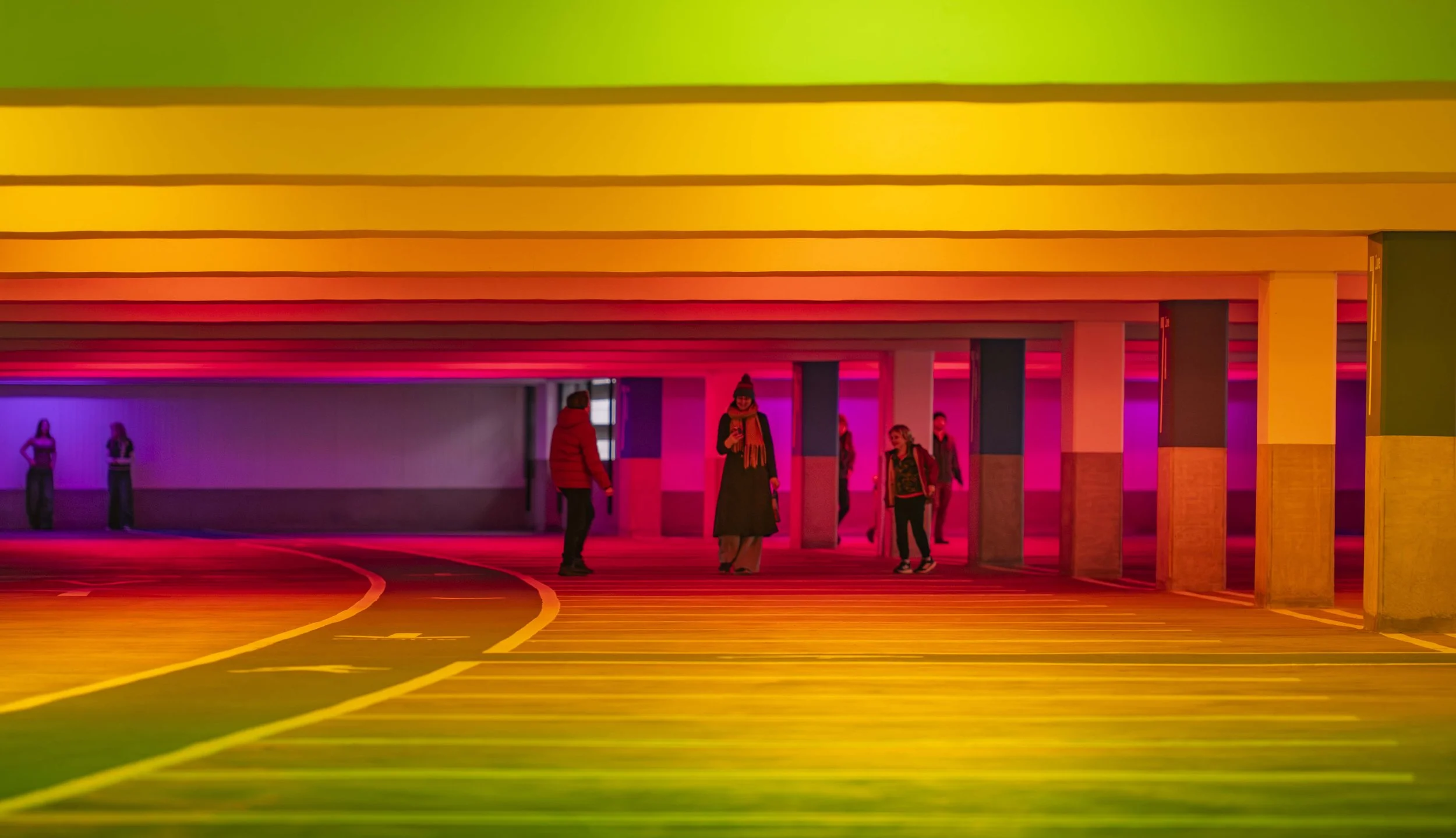
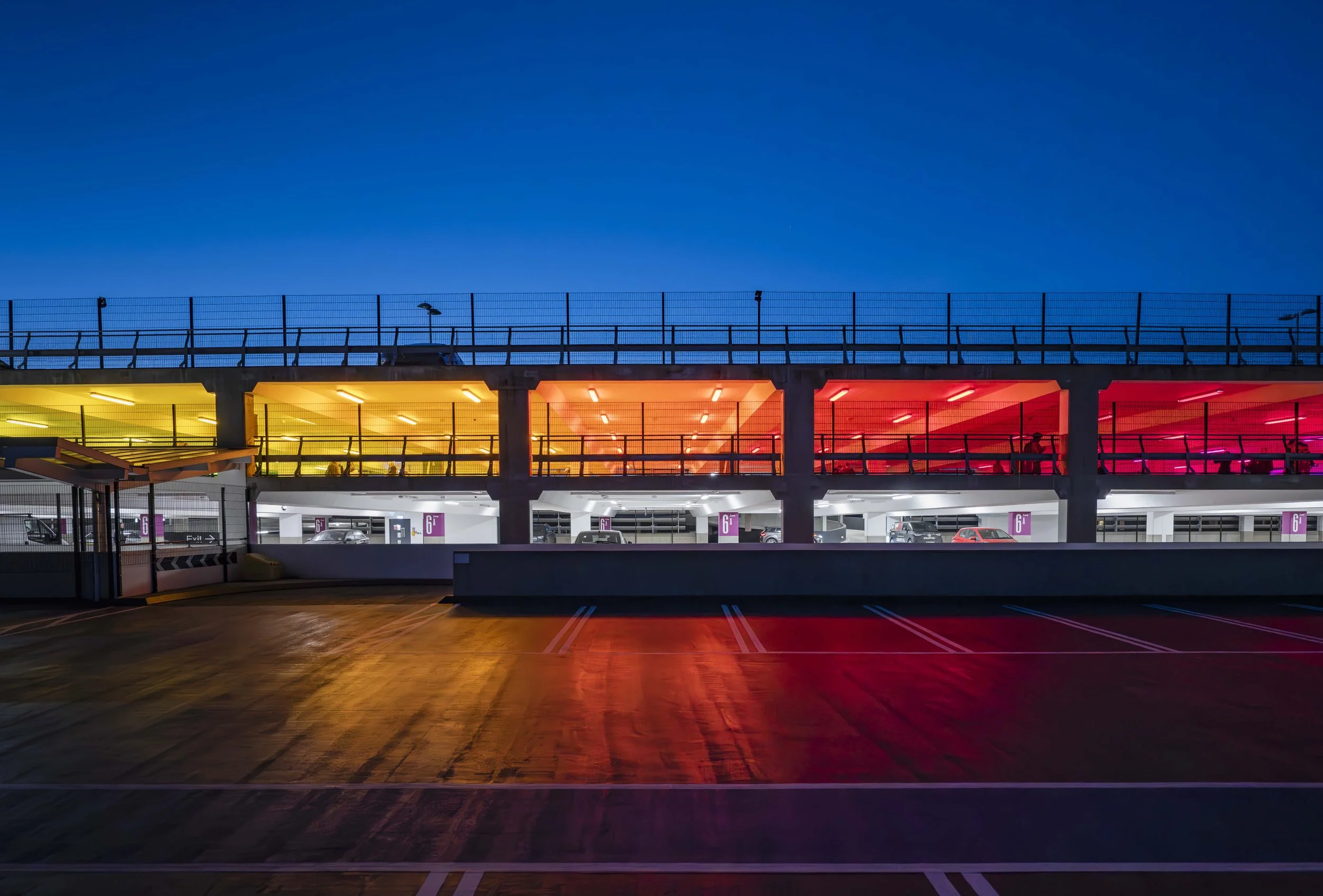
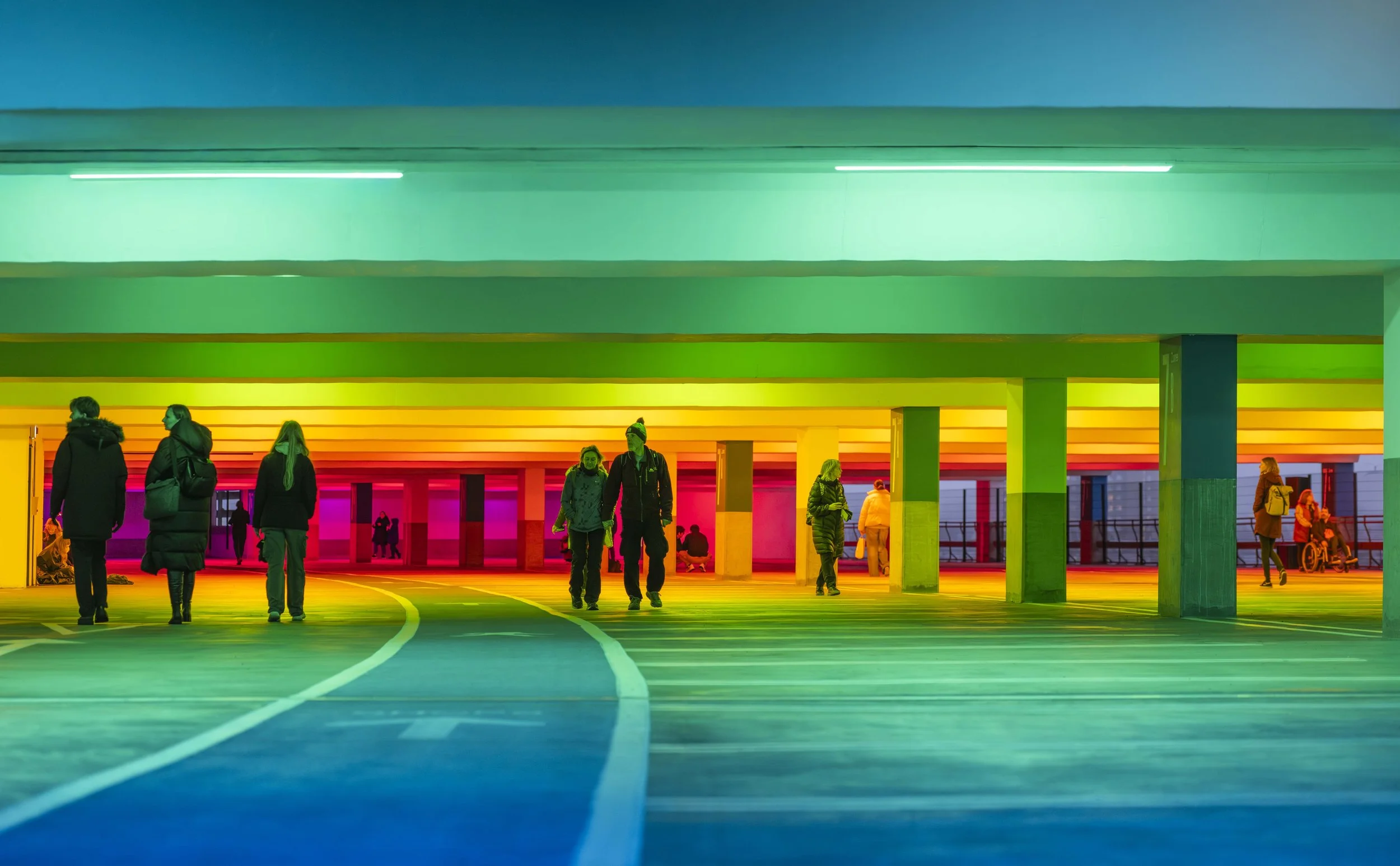
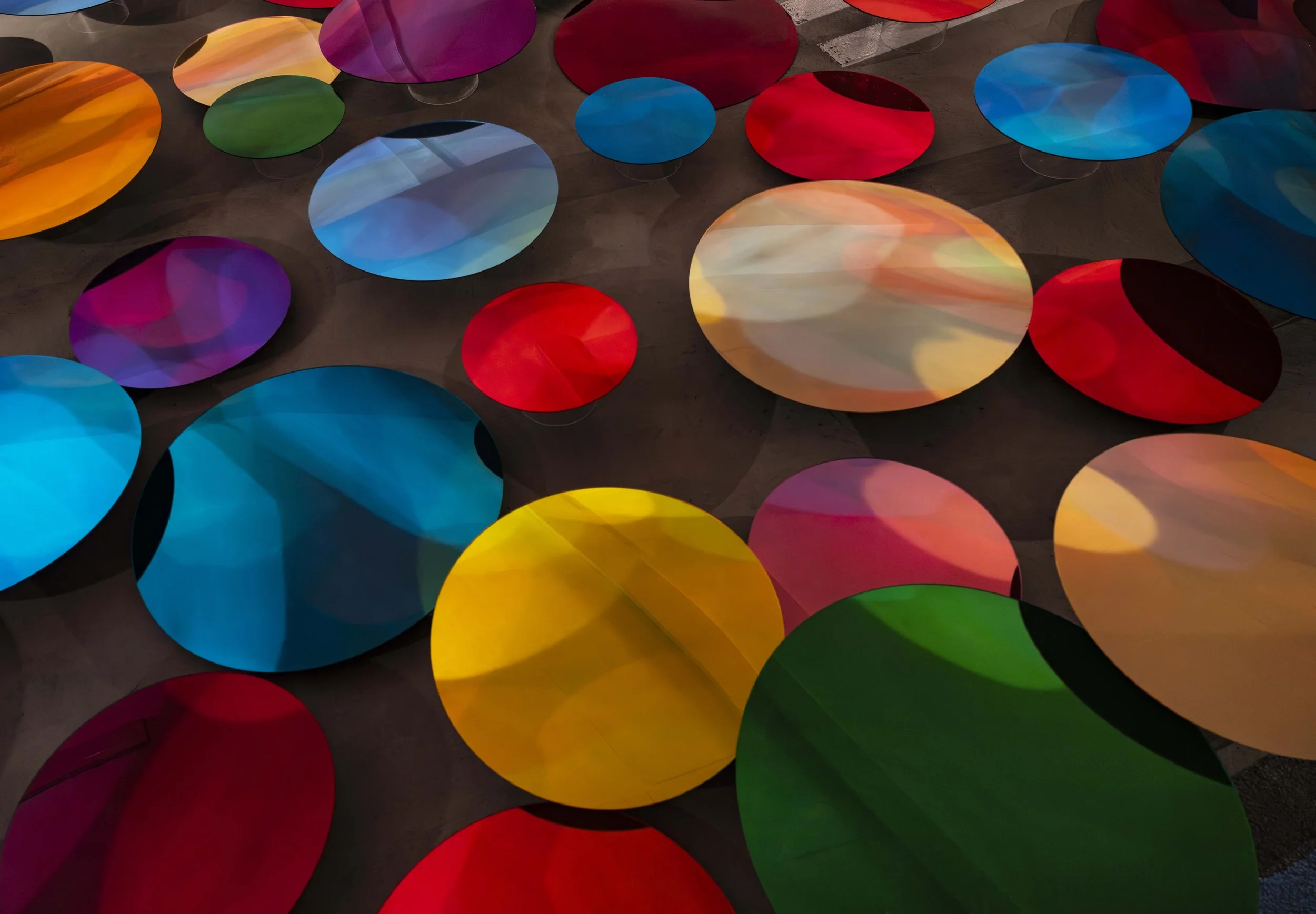
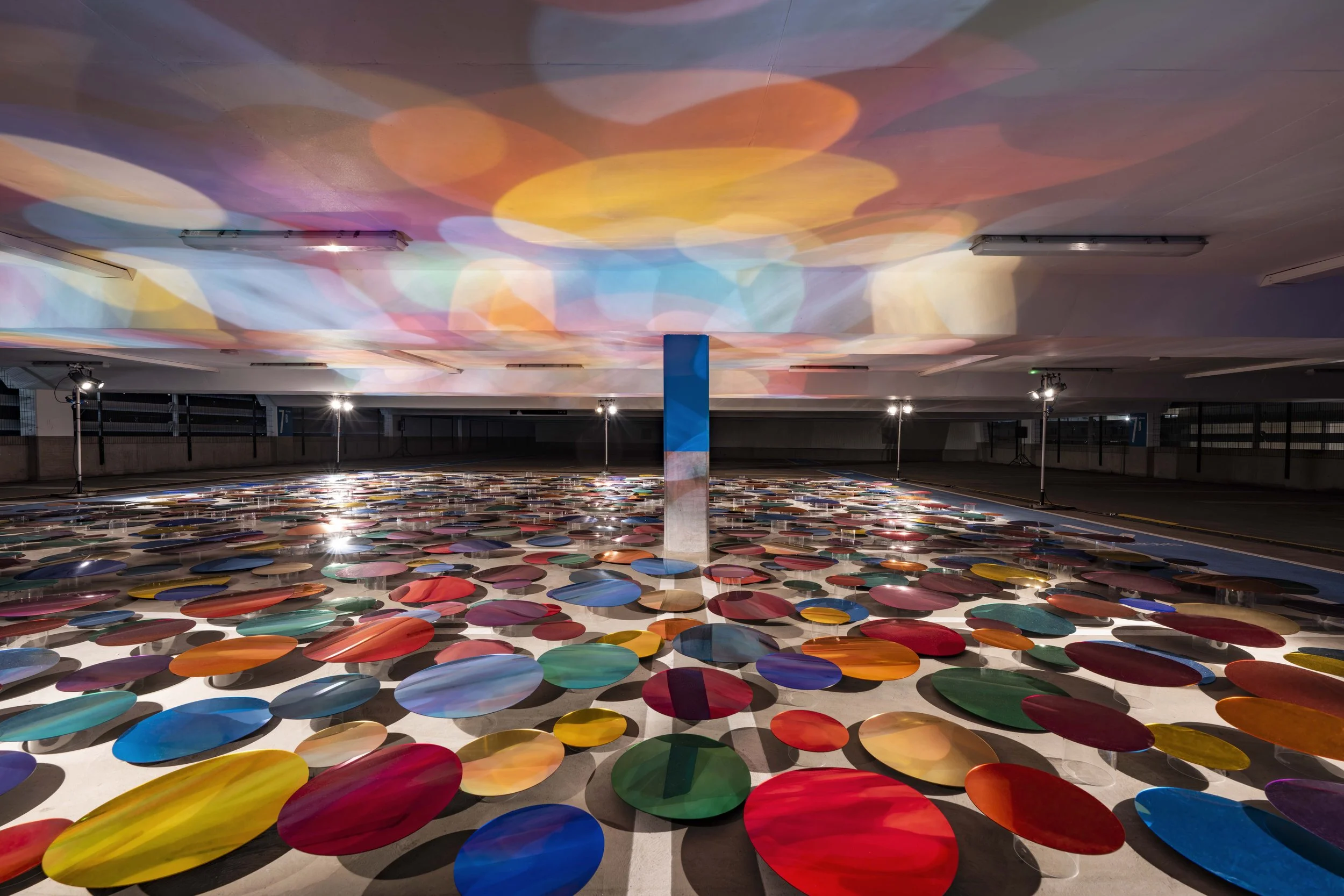
Artist Liz West has reimagined the utilitarian atmosphere of the Cabot Circus multi-storey car park in Bristol, UK, transforming a full level of the concrete structure into a vibrant, colour-saturated environment that explores the physical and emotional impact of the chromatic spectrum.
A Conceptual Shift. The installation, titled Our Colour, represents a deliberate departure from the functional coldness typically associated with urban infrastructure. By utilizing the raw, industrial backdrop of a parking facility, West challenges the viewer to reconsider how light can alter the perception of volume and weight. The project does not merely decorate the space; it consumes it, turning a transitional zone into a destination where the primary material is the light itself. This approach aligns with the artist’s ongoing exploration of sensory environments, a body of work that has been extensively documented through her evolving use of spatial interventions and chromatic theory.
Technical Simplicity, Visual Complexity. The execution relies on a sophisticated application of theatre gels, which act as filters to saturate the existing environment in a radiant spectrum. As natural and artificial light passes through these membranes, the grey surfaces of the car park disappear, replaced by deep violets, piercing cyans, and warm ambers. There is a technical precision in the way the gradients transition, ensuring that the visual field remains balanced despite the intensity of the hues. The simplicity of the medium belies the complexity of the result, as the installation relies on the spectator’s movement to activate the shifting tones.
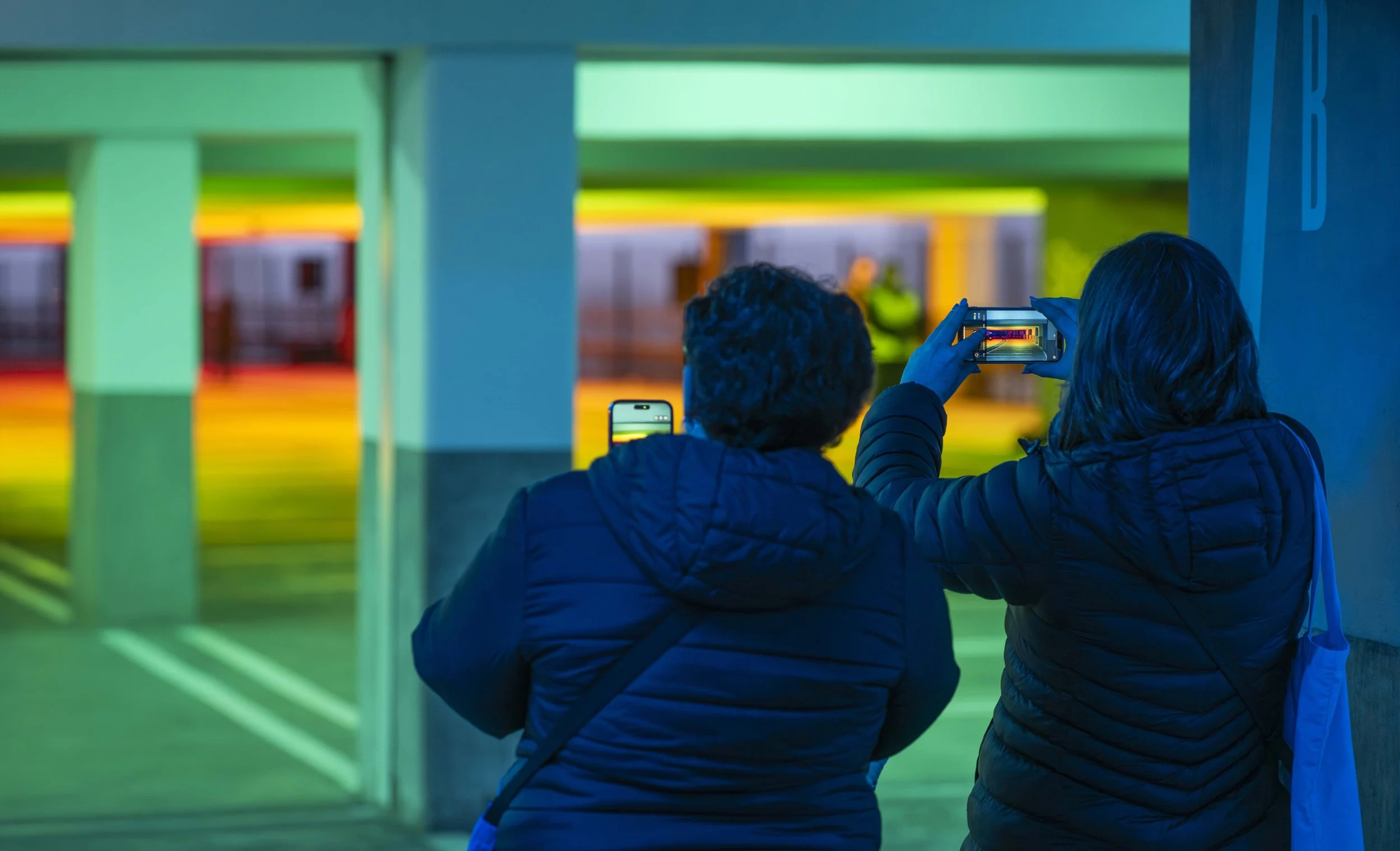
The Sensory Experience. To walk through the installation is to experience colour as a tangible substance. The air feels weighted with pigment, and the boundaries between the floor, ceiling, and structural columns blur. It is an exercise in environmental psychology, forcing the body to react to the atmospheric shifts. One moment, the space feels expansive and cool in a bath of blue; the next, it becomes intimate and urgent under a wash of crimson. This physical immersion creates a rare moment of stillness within the city, encouraging a meditative state that is often absent in high-traffic urban centers.
Redefining the Urban Fabric. This intervention serves as a bold statement on the potential of underutilized public spaces. By reclaiming a level of a car park, the project suggests that even the most mundane environments can be repurposed for cultural engagement. It pushes the narrative beyond traditional gallery walls, placing high-concept art in a location that is accessible and democratic. The juxtaposition of the gritty, functional concrete with the ethereal, glowing light creates a tension that highlights the structural rhythm of the building while softening its impact.
Perception and Emotion. Liz West’s work has always functioned as a dialogue between the viewer and their surroundings. In Bristol, this dialogue becomes personal. The artist poses a fundamental question: how does our mood shift when the world is stripped of its neutral tones? By drenching the visitor in the spectrum, Our Colour becomes a laboratory for human perception. Each individual experiences the installation differently, as the eye and brain work to adjust to the overwhelming chromatic input, making the subjective nature of sight the true subject of the piece.
A Lasting Contextual Impact. Beyond the immediate visual spectacle, the project reflects a broader movement toward experience-driven urbanism. It demonstrates how creative programming can revitalize city centers and foster a sense of community pride. The installation captures the creative spirit of the city, offering a vibrant, memorable encounter that remains etched in the mind long after leaving the site. It stands as a testament to the power of light to redefine our relationship with the built environment, proving that even the most overlooked spaces can be filled with wonder and purpose.
The installation was a centerpiece of the 2026 edition of the Bristol Light Festival, which activated the city from 19 to 28 February, inviting the public to rediscover urban infrastructure through the lens of contemporary light art.
Images courtesy of Charles Emerson
Written by Vincenzo Luca Di Pierro. Founded in 2009 in Milan, urdesign is a global platform for all architecture and design professionals and enthusiasts.