



Gathering
Lynne Green, 2012
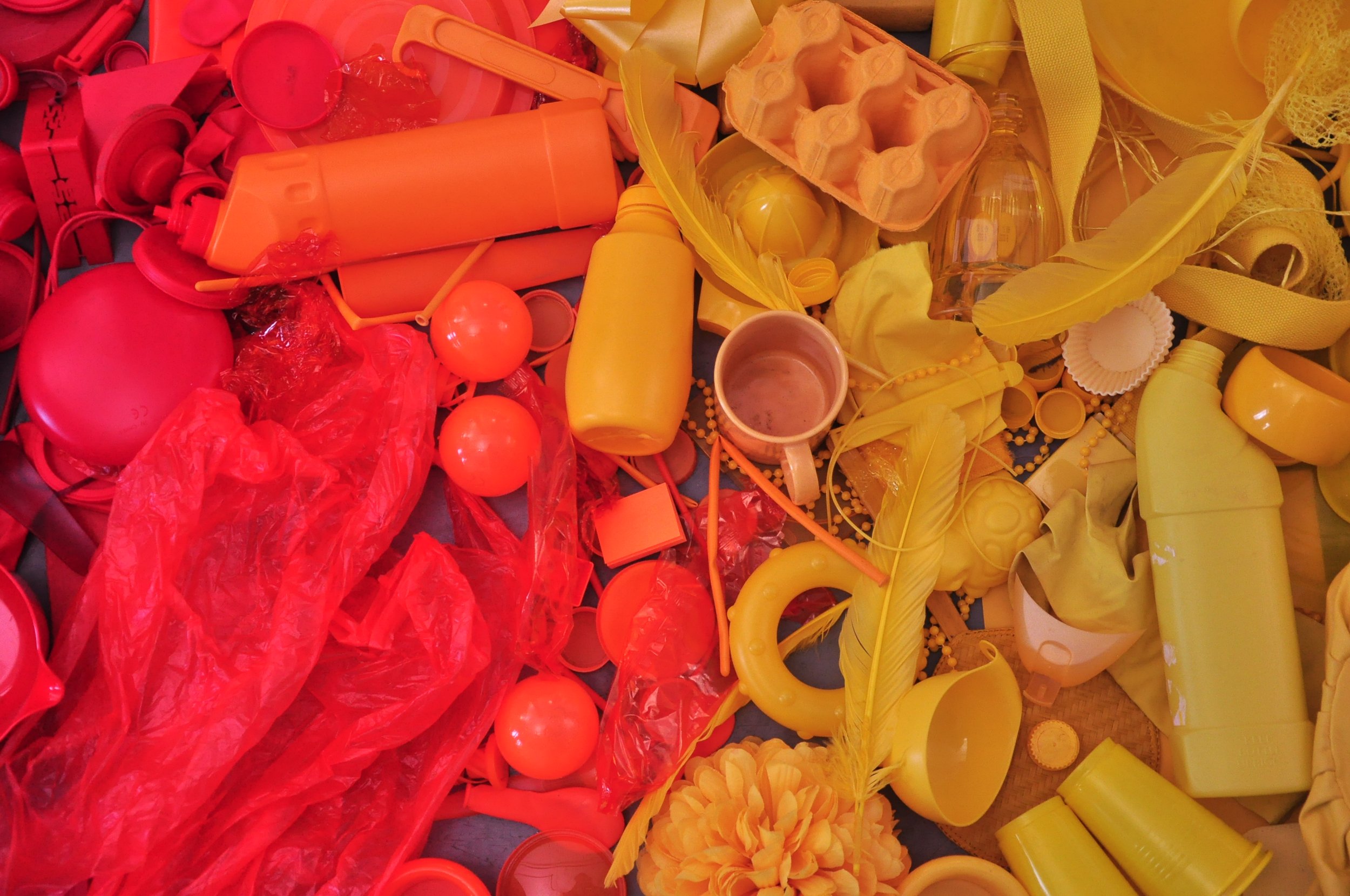
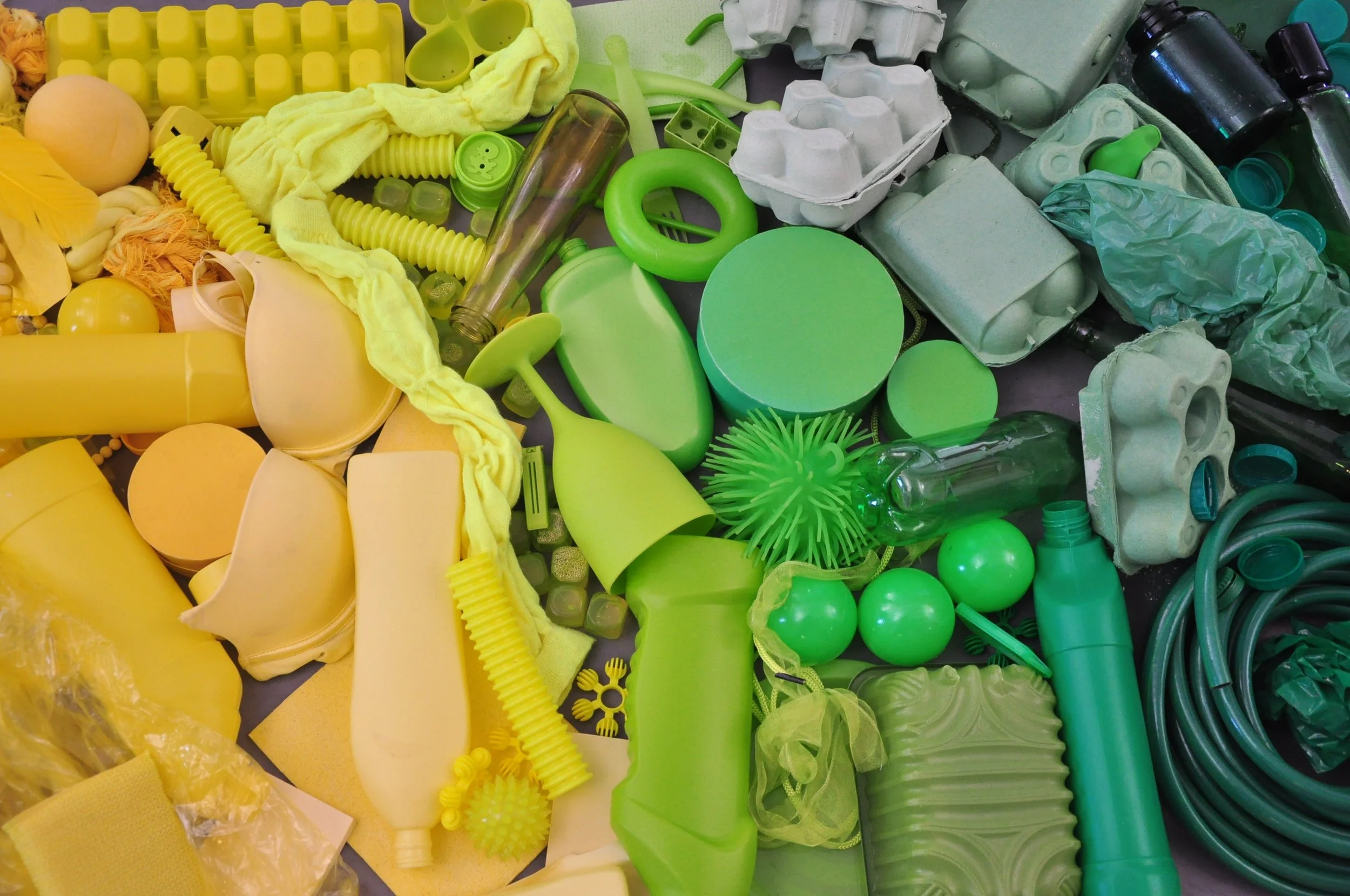
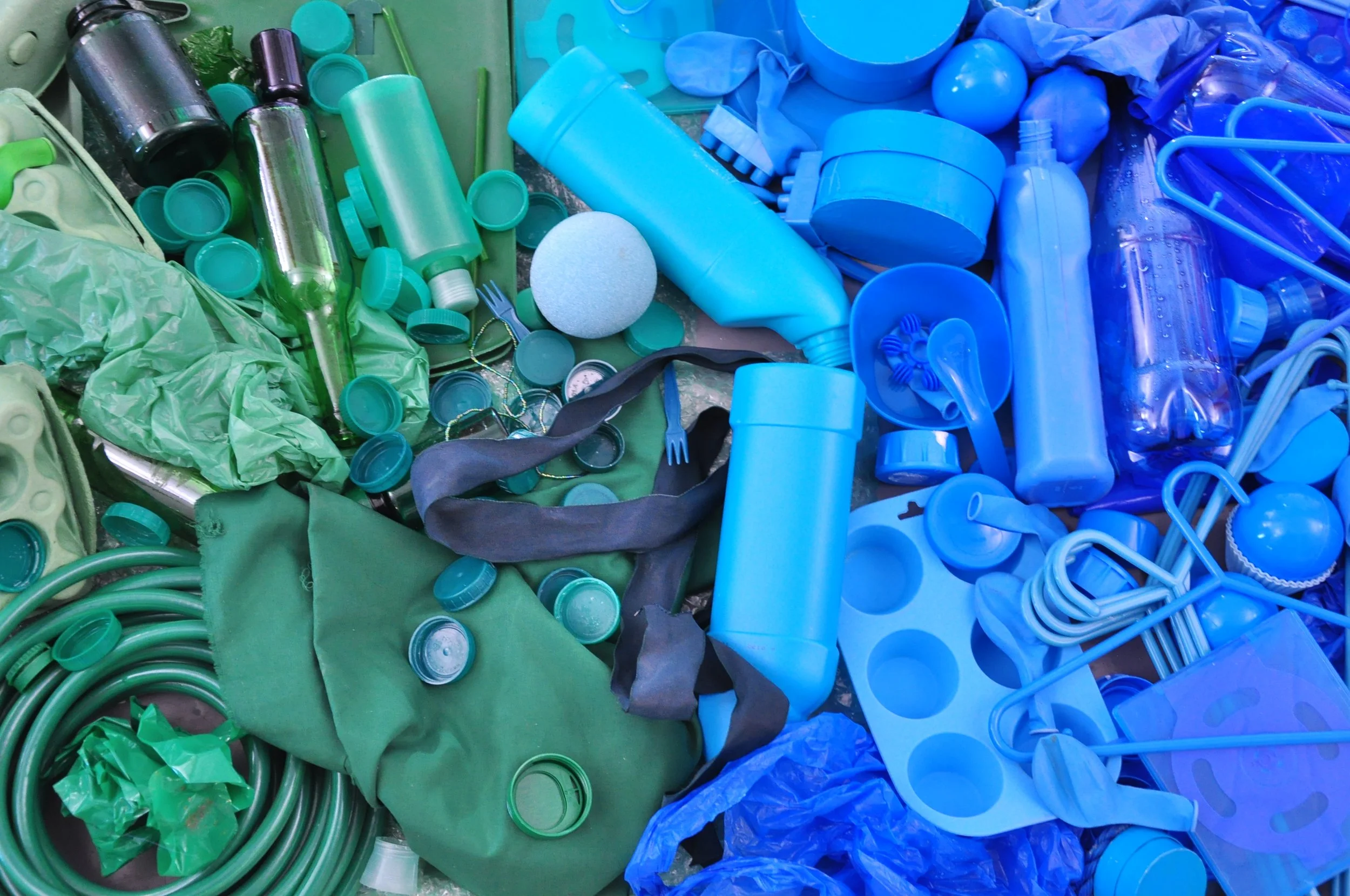
Gathering: one of the most ancient of human activities, shared by our primate relatives and indeed by many other diverse species. To a lesser or greater degree we all gather things to ourselves: objects useful or necessary, objects that have meaning to us as individuals, or those with a wider, cultural significance – collective symbols of current preoccupations and fashions (of for instance, technological advance – from stones axes to mobile phones). Colour: we navigate our lives by its symbolism, its cultural meanings and associations (traffic lights being the obvious example). Our language is peppered with the use of specific colour to describe mood; our emotions and our choices are manipulated by its subtle variety and beauty – any advertising agency will confirm that. We have our favourite colours and usually know which we look best in, yet we hardly notice its power over us as we move through the world. Chroma: saturation (the intensity of colour). Chromatic: relating to colour, highly coloured; consisting of or produced by colour; as in music, where a scale may use all the keys on a keyboard, inclusivity is implied. Chromaticity: the colour quality of light. Liz West’s process as an artist is one of gathering, in which colour plays a crucial role. Her palette is the range of hue available in the products of industrial manufacture, theatrically illuminated and intensified by the strength of artificial light she employs.
The desire to collect (or rather, I might say, obsession with assembling) a related group of objects emerged early in West’s life, long before she became an artist. Focussed for many years on the acquisition of a large collection of Spice Girl memorabilia, this impulse has become a motivational and recurring motif in her art. Once driving the, often expensive acquisition of rare pop-culture icons, West’s gathering instinct is now focussed on creating subtle and intriguing works of art made from the (freely available) detritus of contemporary life. The most over-looked materials of our consumer lives, the items we discard without a thought, the containers thrown away (perhaps recycled) after we have consumed or used their contents, are the artist’s raw material. Through the processes of collecting (which implies selection), of ordering and assemblage, married to an acute understanding of the power of colour, West creates an art that is both apparently simple and yet multi-faceted in its implications.
The bringing together of disparate and un-related objects, orchestrated by the imagination of the artist to generate relationship and thus meaning, has been key in the language of art for the past two centuries. The objects West works with have diverse uses (and consequent individual meaning), but it is their colour that determines their selection and juxtaposition. While they remain identifiable, together they transcend their prosaic identity in the generation of a new visual experience for both artist and viewer. West’s work hovers between the sculptural and the painterly. Her primary means is site-specific (performance or installation), where largely what remains is a series of photographs that document the work. Her three-dimensional use of objects is matched by a painter’s sensibility in the use of colour and light. The latter is crucial in work where intensely lit coloured assemblages reflect their hue beyond their confines, out into our (the gallery) space. That this intensity of light-on-colour also leaves after-images of chromatic sensation upon our retina seems an appropriate metaphor for the lasting impression West’s work leaves upon our imagination.
Lynne Green is an art historian whose specialist fields are British modernism and contemporary art.